Sandstone samples at the Saski Palace reconstruction site
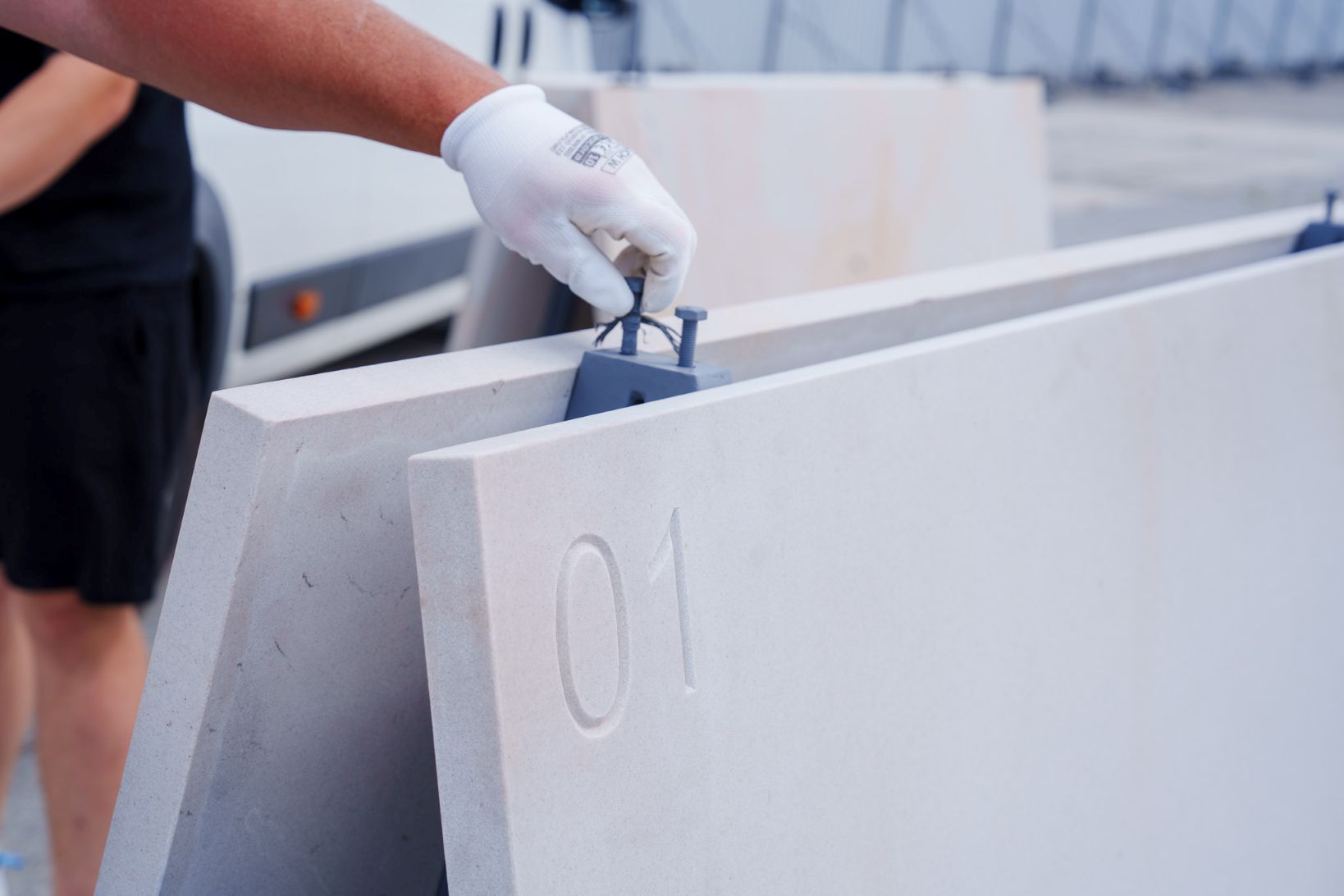
Monitoring of trial sandstone slabs is now under way as part of the reconstruction of the Saski (also Saxon) and Brühl Palaces and the tenement houses on Królewska Street. Twenty sandstone slabs, sourced from several Polish quarries, including near Szydłowiec and in Lower Silesia, have been delivered to Piłsudski Square. Regular on‑site monitoring will show how the stone’s properties change under weathering at the very location where the material will ultimately adorn the façades of the restored buildings.
Stone and the reconstruction of the Saski Palace
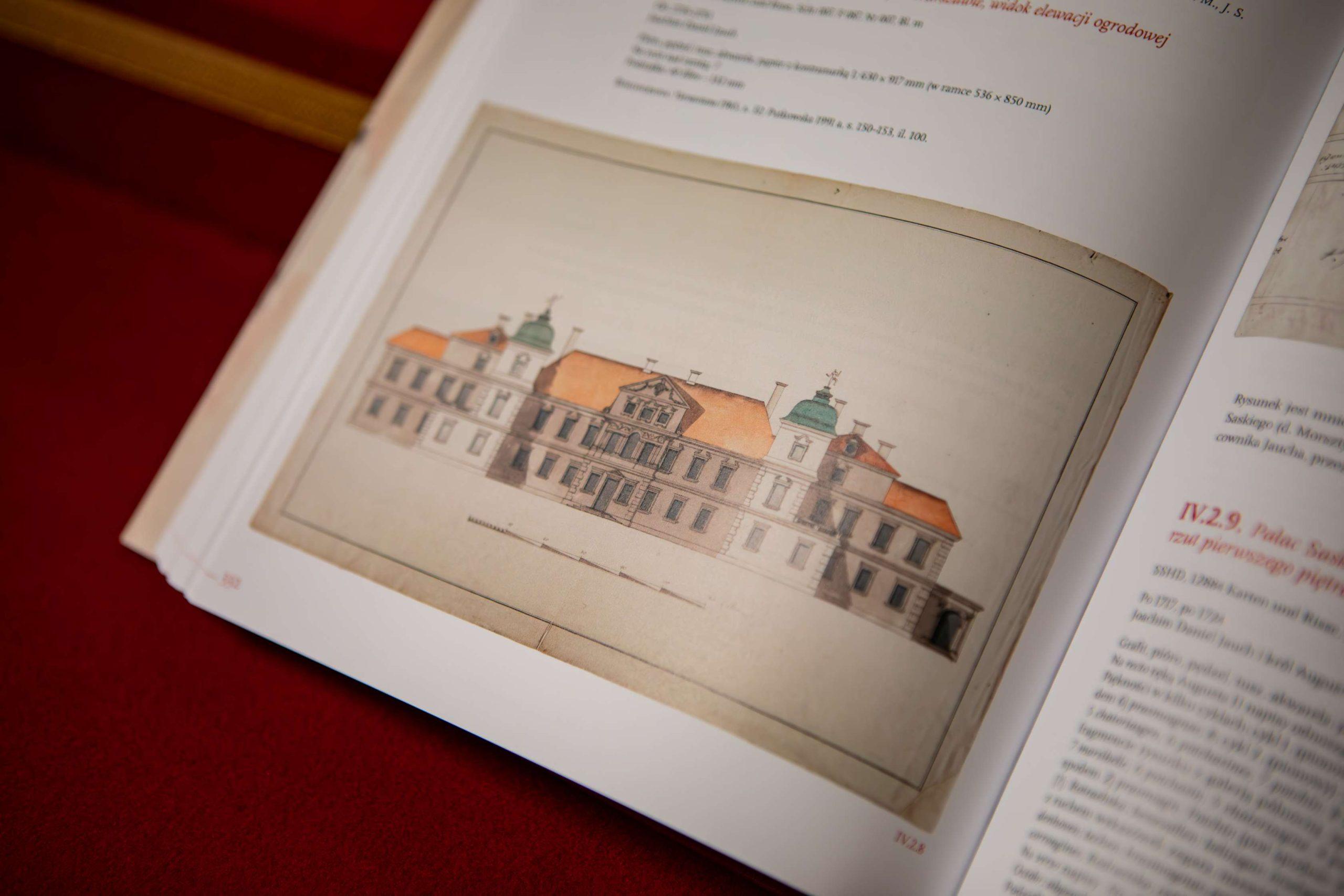
More than 80 years after their destruction, the reconstruction of the western frontage of Piłsudski Square, comprising the Saski and Brühl Palaces and the tenement buildings at 6, 8 and 10/12 Królewska Street, requires extensive preparatory works. A preliminary programme of archival research undertaken at the outset of the project yielded around 4,000 pages of iconographic, cartographic and other materials, such as plans and accounts. These archival sources enabled the team to prepare an architectural analysis of all the buildings undergoing reconstruction. The document confirms that sandstone was among the materials used for the palace façades. This sedimentary rock, commonly used in construction, was employed at the Saski Palace for elements such as balustrades, the facing of arcade piers, and bas-reliefs. Now, another chapter begins in the story of this stone, which has just arrived at Piłsudski Square from across Poland.
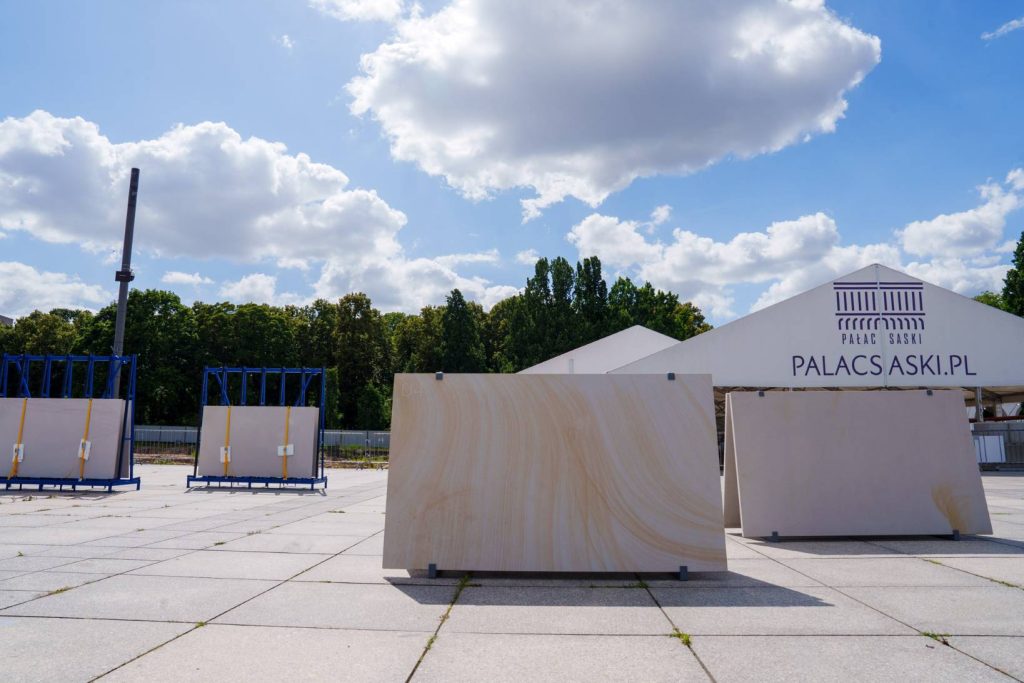
Sandstone slabs under test
Faithfully recreating the restored western frontage of Piłsudski Square requires materials that retain their properties when exposed to various weather conditions, including rain, snow, frost, wind, and sunlight. Long‑term monitoring of sandstone, begun at the preparatory stage under conditions similar to those of the final setting, will enable petrologists to assess any changes in its structure and appearance. At later stages of the project, findings from these observations will inform the selection of an appropriate, durable stone to be used in, among other applications, the elements of the Saski Palace façade.
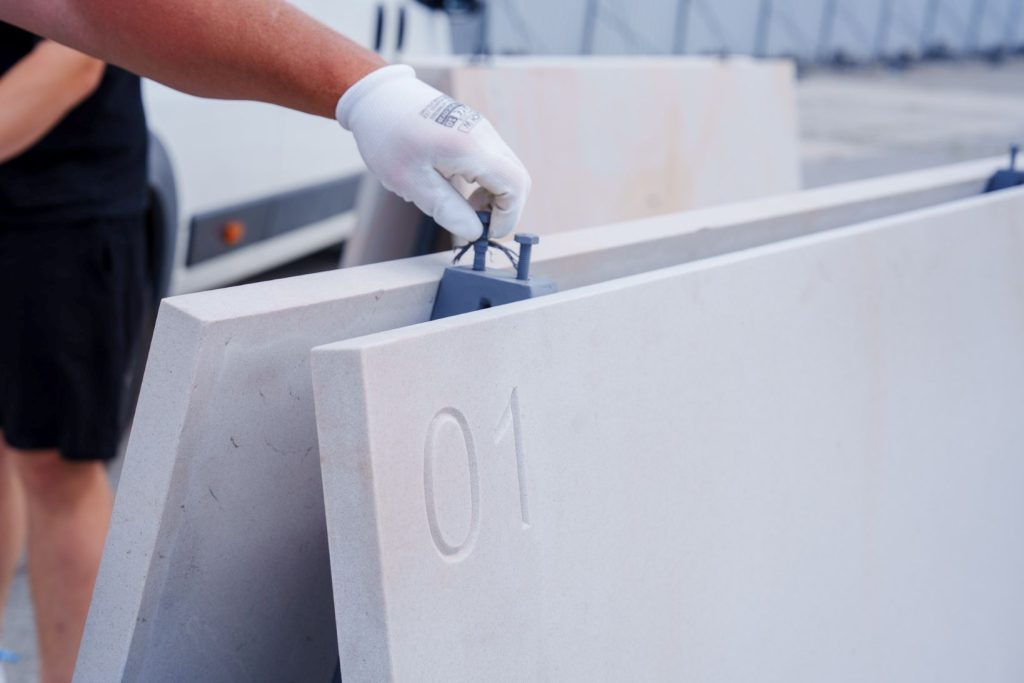
Each slab under observation has its own record sheet specifying, for example, the type of sandstone, the location and date of extraction, colour, structure and absorbency. Different sandstones also vary in their resistance to frost, abrasion and fire. Another important parameter is the weight of each slab; according to manufacturers, some can become up to twice as heavy when saturated with water, which in turn affects structural design choices during reconstruction.
The process of rebuilding the Saski Palace
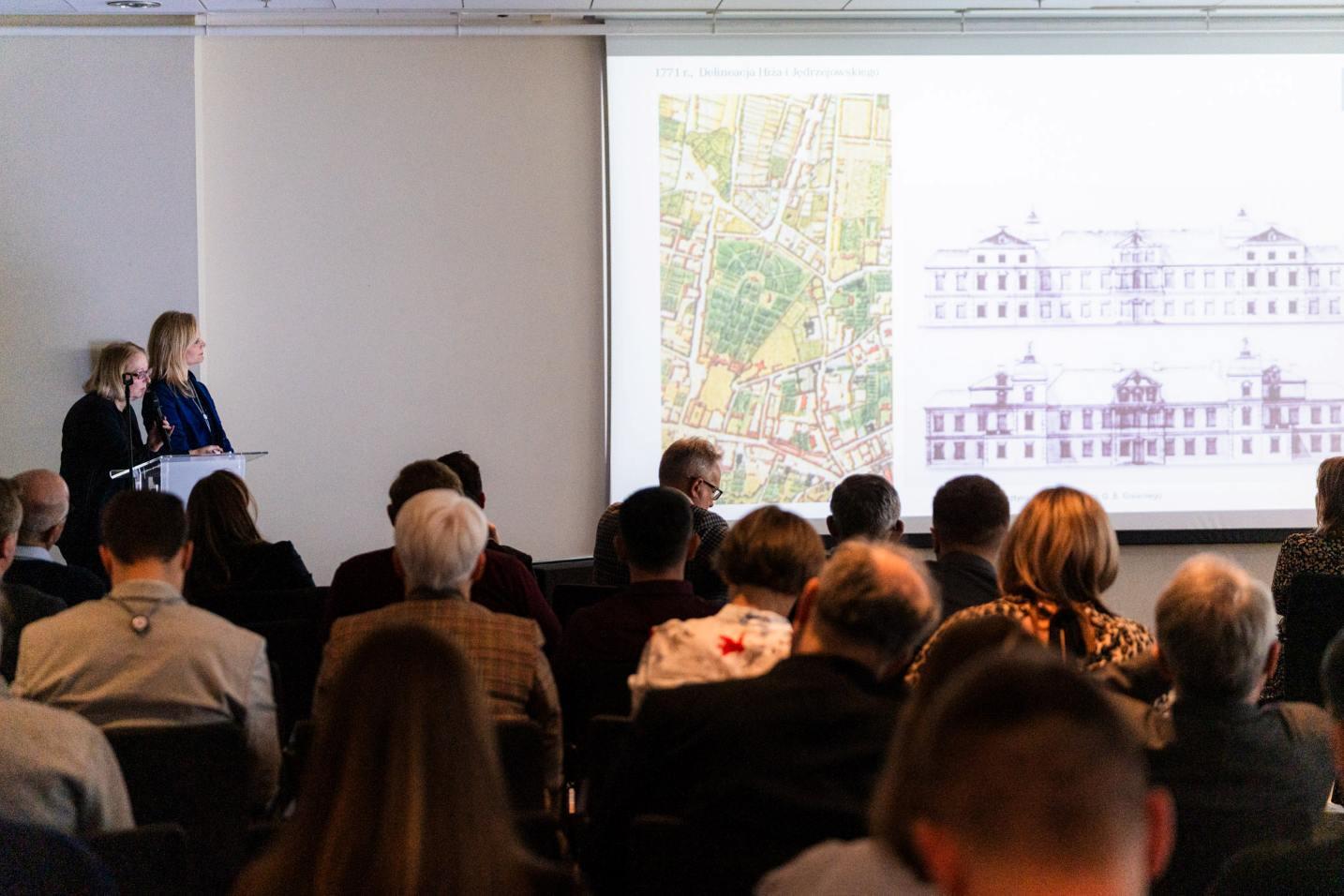
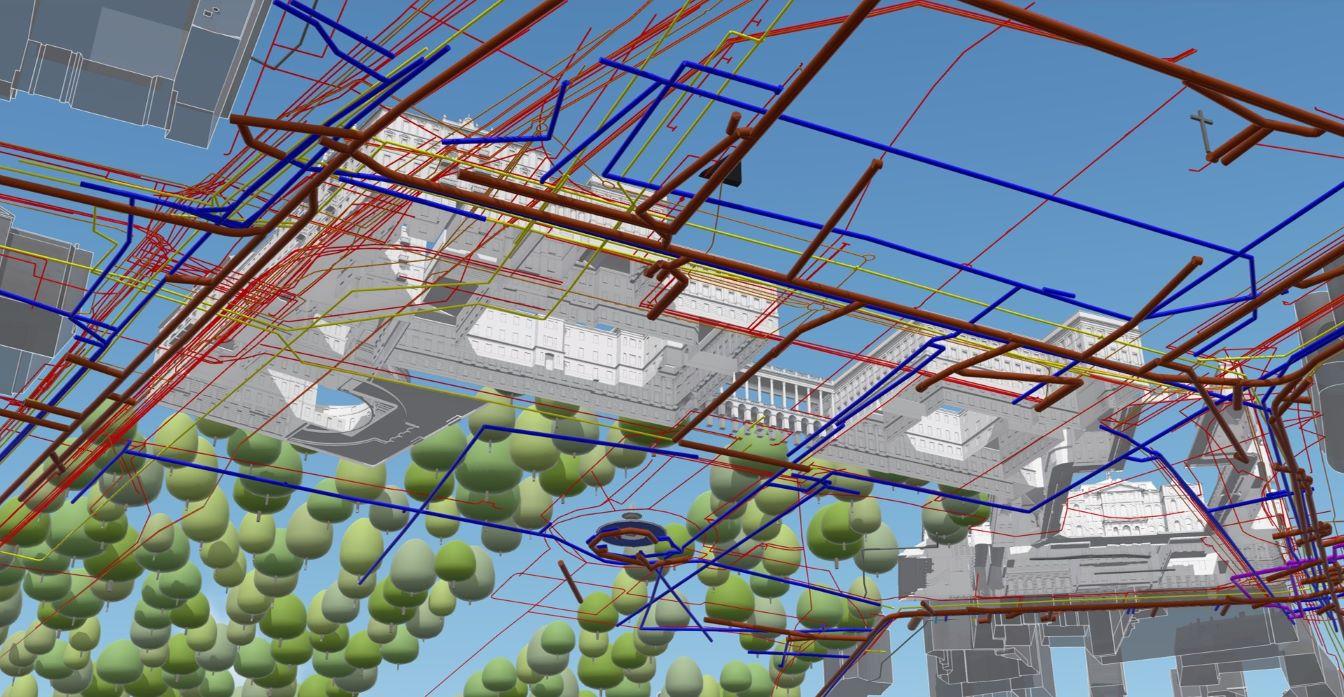
Monitoring of trial sandstone slabs is only one element of the stone‑material strategy adopted for the ongoing reconstruction of the western frontage of Piłsudski Square. At the start of the project in 2022, petrographic studies of the Tomb of the Unknown Soldier were undertaken. These involved sampling the bases of the two columns surmounting the monument and then analysing the composition of the original stone that once formed part of the Saski Palace colonnade. A year later, archaeological excavations at the Brühl Palace site uncovered nearly 10,000 artefacts. A significant proportion were stone elements, including numerous architectural details. While some proved to have come from elsewhere – such as the partially preserved sculpture ‘Glory’ from the Saxon Garden, or a fragment of a plaque from the pre-war façade of the Royal Castle – the remainder were subjected to further research and conservation work. This included 3D scanning, which enables the precise recording of the geometry of reconstructed façade elements. The results of the work to date have also been the focus of one of the specialist workshops on the use of natural stone for the façades of the restored buildings. One of the aims of the series of expert workshops organised by the Pałac Saski company was to prepare the ‘Good Practice Handbook’.