Growing public support for the reconstruction of the Saski Palace
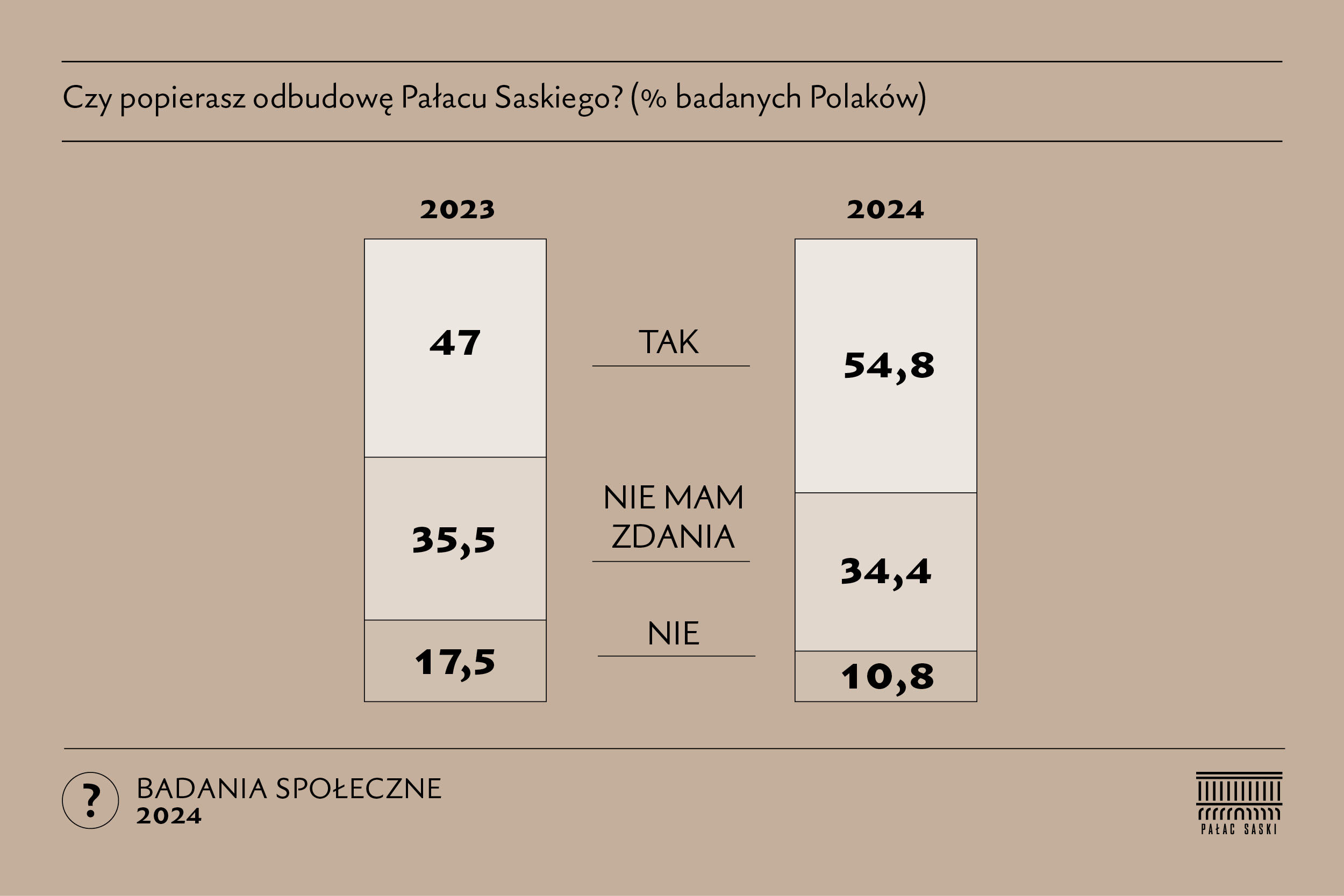
According to the latest opinion polling on the reconstruction of the Saski Palace (also Saxon Palace), the project enjoys steadily growing public support. By the end of 2024, the data showed supporters outnumbering opponents by roughly five to one. More than half of respondents (55%) expect the reconstruction to take place, reflecting a European trend of increasing interest in historic architecture and heritage restoration. At the same time, opposition has clearly declined – down 12 percentage points among Warsaw residents and 6 points nationwide, compared with 2023. As a result, only around 11% of respondents said they were ‘rather’ or ‘strongly’ opposed to restoring the pre‑war appearance of the western frontage of Marshal Józef Piłsudski Square.
Annual social survey
The reconstruction of the Saski Palace, the Brühl Palace and three tenement houses on Królewska Street in Warsaw, all of which were destroyed by German forces, is being carried out under the Act of 11 August 2021, which provides for restoring the historic form of the western frontage of Piłsudski Square as at 31 August 1939, and for creating a functional space that includes, among other things, cultural and educational uses for both Warsaw residents and visitors to the capital.
To better understand the expectations of future users of the reconstructed building complex, the fourth wave of the annual community survey was conducted in December 2024. As in previous years, the research agency Minds & Roses carried out a CATI (computer‑assisted telephone interviewing) survey. A total of 1,200 respondents – 1,000 in a nationwide sample and an additional 200 Warsaw residents – gave their views on the reconstruction of the Saski Palace. What do the results show?
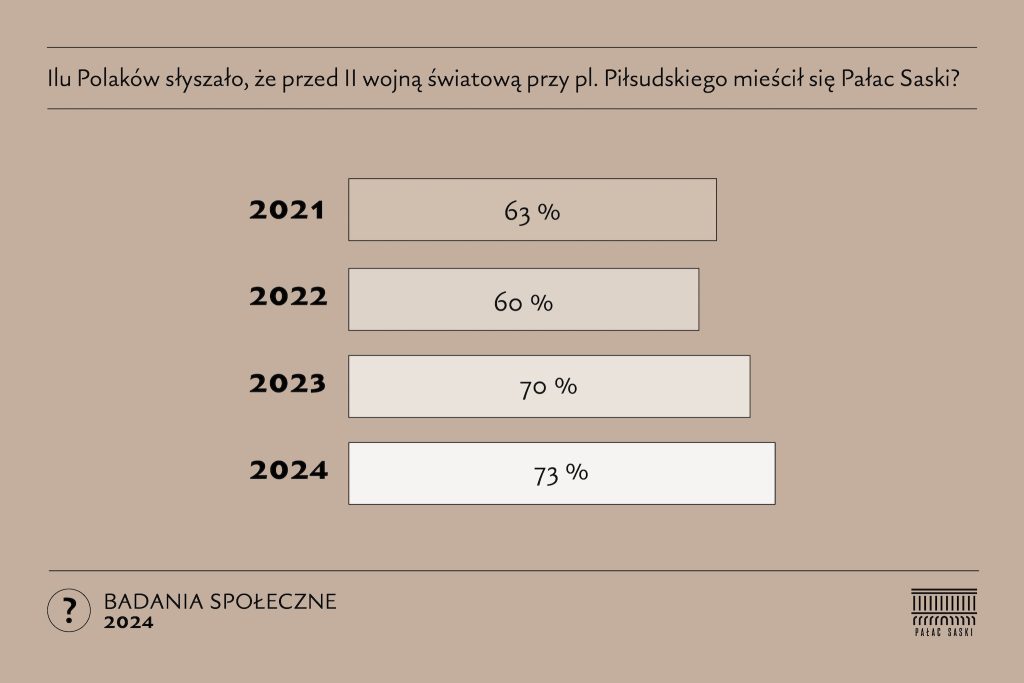
Public awareness of the Saski Palace
According to the survey, most respondents were aware that Warsaw’s Piłsudski Square was home to the Saski Palace before the Second World War. Awareness of this fact has risen over the past three years and now stands at 73% nationwide and 85% in Warsaw, suggesting that the narrative about positive changes in the city’s public realm resonates with the public. Interestingly, over the past year – thanks in part to the Pałac Saski company’s educational activities – awareness among women has risen by eight percentage points. Similarly, awareness among 18–29‑year‑olds rose by nine percentage points. The growing level of historical knowledge about the palace‑and‑tenement house complex is linked, among other factors, to increasing media coverage of the ongoing reconstruction project. What do respondents think about this project?
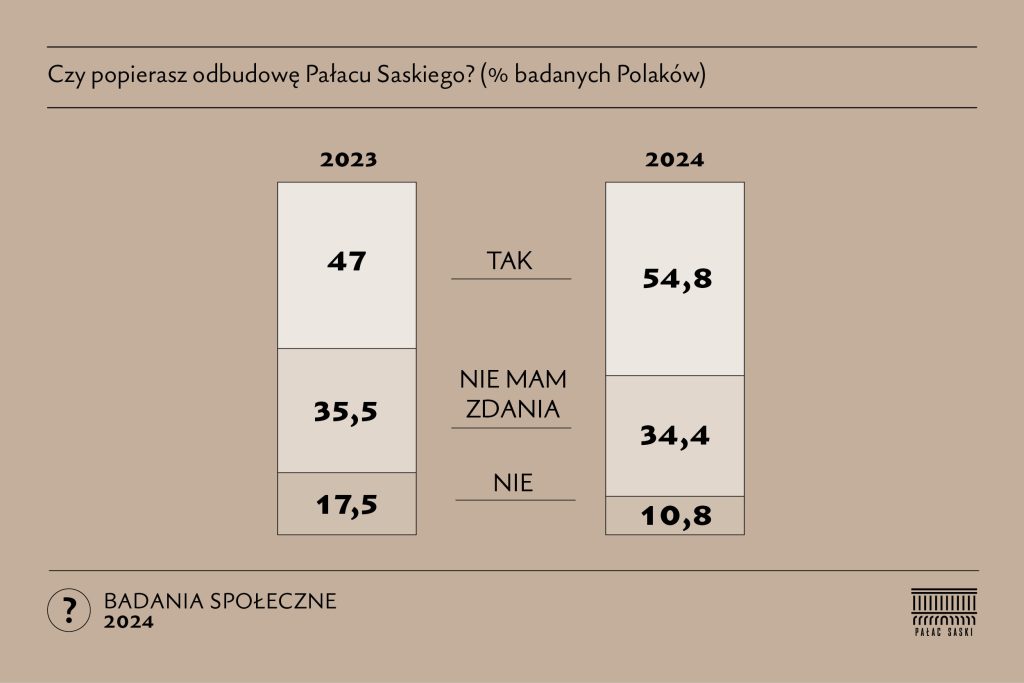
More than half of Poles support the Saski Palace reconstruction
The results of an opinion poll conducted in late 2024 marked a turning point in support for delivering the project on Piłsudski Square. Although previous surveys had shown that supporters outnumbered opponents, this time supporters outnumbered opponents by roughly five to one. 55% of all respondents expect the reconstruction to go ahead, representing an increase of eight percentage points compared with last year’s survey. As for Warsaw residents, support remained steady at 50%. At the same time, however, opposition fell significantly – down twelve percentage points in Warsaw and points nationwide.
Reconstruction of the Saski Palace: pros and cons
The reconstruction of cultural heritage damaged or destroyed by natural disasters or war is increasingly common in Poland and abroad. Some sites are restored soon after damage to ensure they can continue in use – for example, Notre‑Dame Cathedral – while others regain their former appearance after many years. One such case is the reconstruction of historic buildings in Dresden, initiated by residents as an expression of their wish to restore the city’s identity. So how does the public view the reconstruction of the Saski Palace?
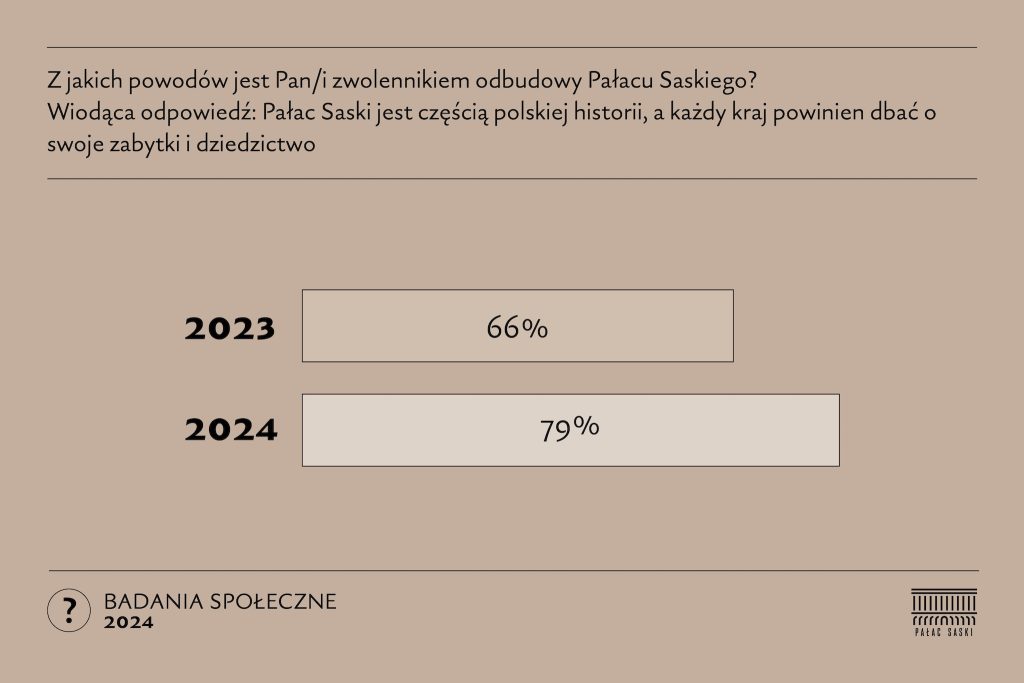
As in previous waves of social surveys, pollsters asked about reasons for support or opposition to the project in Warsaw’s historic centre. The leading reason cited by supporters – chosen by 79% nationwide and 73% in Warsaw – was that the palace is part of Polish history and that every country should look after its monuments and heritage. Other positive aspects of the reconstruction highlighted by respondents included its aesthetic and architectural qualities.
Cost remains the most common argument among opponents, though its importance appears to be diminishing compared with the 2022 survey. Excessive reconstruction costs are now cited by 42% of opponents nationwide (down 22 percentage points from 2022) and 49% in Warsaw (down 12 points). This significant change may suggest that attention is shifting from cost to a focus on reconstruction quality.
The figures presented are partial results from an opinion poll conducted by the research agency Minds & Roses in December 2024.