Przejdź do treści głównej
Contrast
Size
news

Geodetic monitoring of the Tomb of the Unknown Soldier

Not all of the reconstruction works on the western frontage of Piłsudski Square are as spectacular as the construction of a roofing over the relics of the Saski Palace listed in the register of monuments. Such activities, which are necessary during the preparation of the investment, although not noticeable to most outsiders, include geodetic monitoring of the Tomb of the Unknown Soldier.
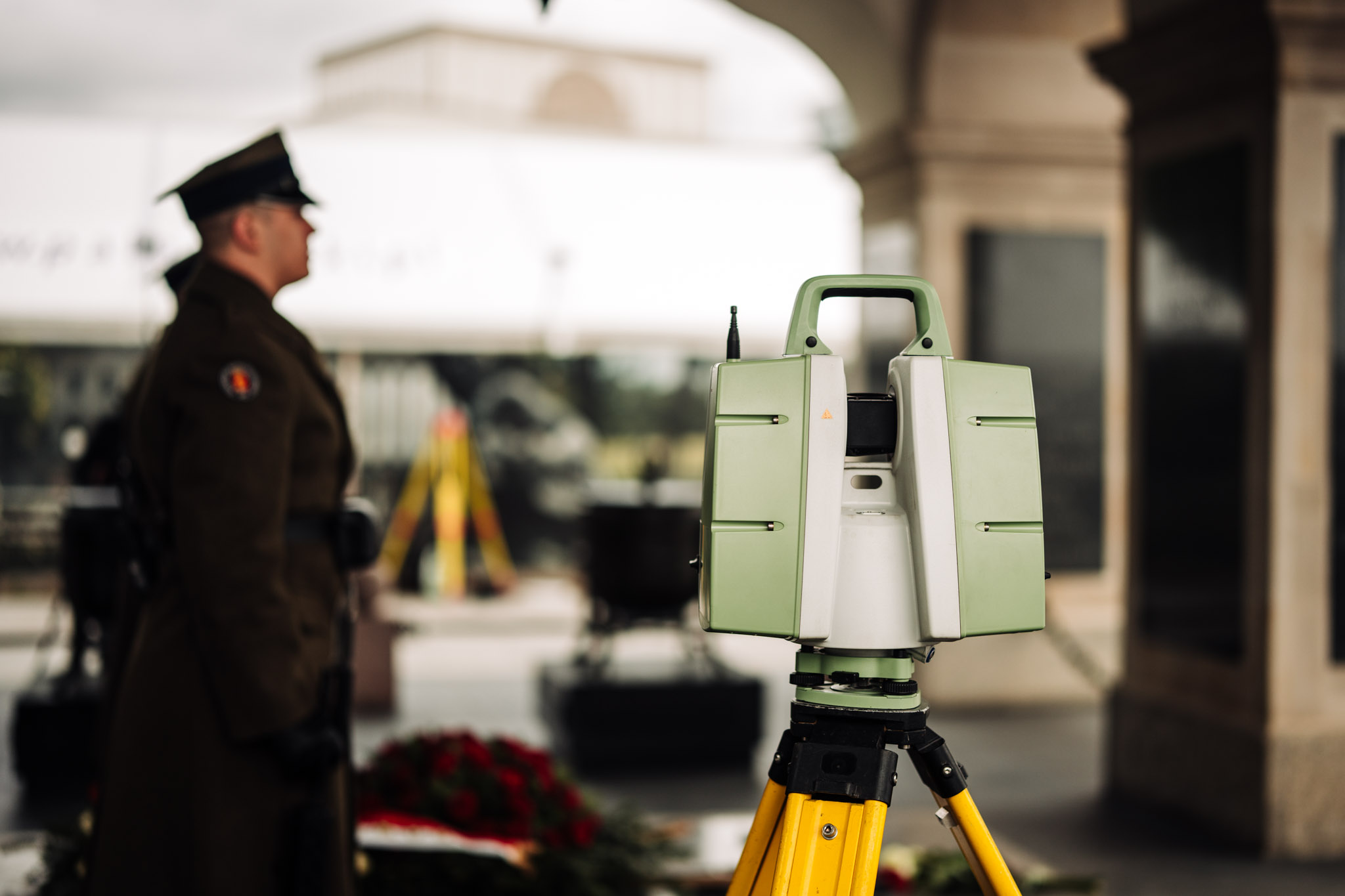
Na pierwszym planie przenośne urządzenie na statywie trójnożnym. Na drugim planie znajduje się wojskowy w mundurze wewnątrz Grobu Nieznanego Żołnierza. Z prawej strony rysują się arkady Grobu.
Geodetic monitoring of the Tomb of the Unknown Soldier. Photo by T. Tołłoczko

What is geodetic monitoring?

Geodetic monitoring is a method of observing a given structure or facility by conducting systematic measurements and then completing a detailed analysis. In the case of the process of rebuilding the Saski Palace, this is how we are inspecting the historic site of the Tomb of the Unknown Soldier. As a result, a section of the palace arcade, which has housed the most important national memorial for almost a century, is being monitored for the potential impact of the works conducted nearby.

Monitoring of the Tomb of the Unknown Soldier

Geodetic monitoring and its ongoing analysis are used to assess the impact of nearby archaeological and conservation works, and ultimately also construction works, on the Tomb of the Unknown Soldier. For this purpose, laser scanning was used, which enables the overall capture of the monitored object in the field. The first session, i.e. zero measurement, was carried out on 26 July 2022, before the project area was fenced off and the groundworks started. Three months later, after the unveiling of the relics of the Saski Palace in the area of the Tomb of the Unknown Soldier, the first comparative session took place. The repeated 3D scan of the monument was linked to the previously established geodetic network, i.e. a set of 20 points in the area around Piłsudski Square. Some of these points include reflective survey targets on surrounding buildings and lampposts, as well as survey nails permanently driven into the ground.

By comparing the measurement results from the zero session and the results from subsequent measurement sessions, it is possible to determine even the smallest (considering measurement errors) changes in the object’s geometry (i.e. its deformations - displacements) and thus also the consequences of these displacements, such as the enlargement of cracks.
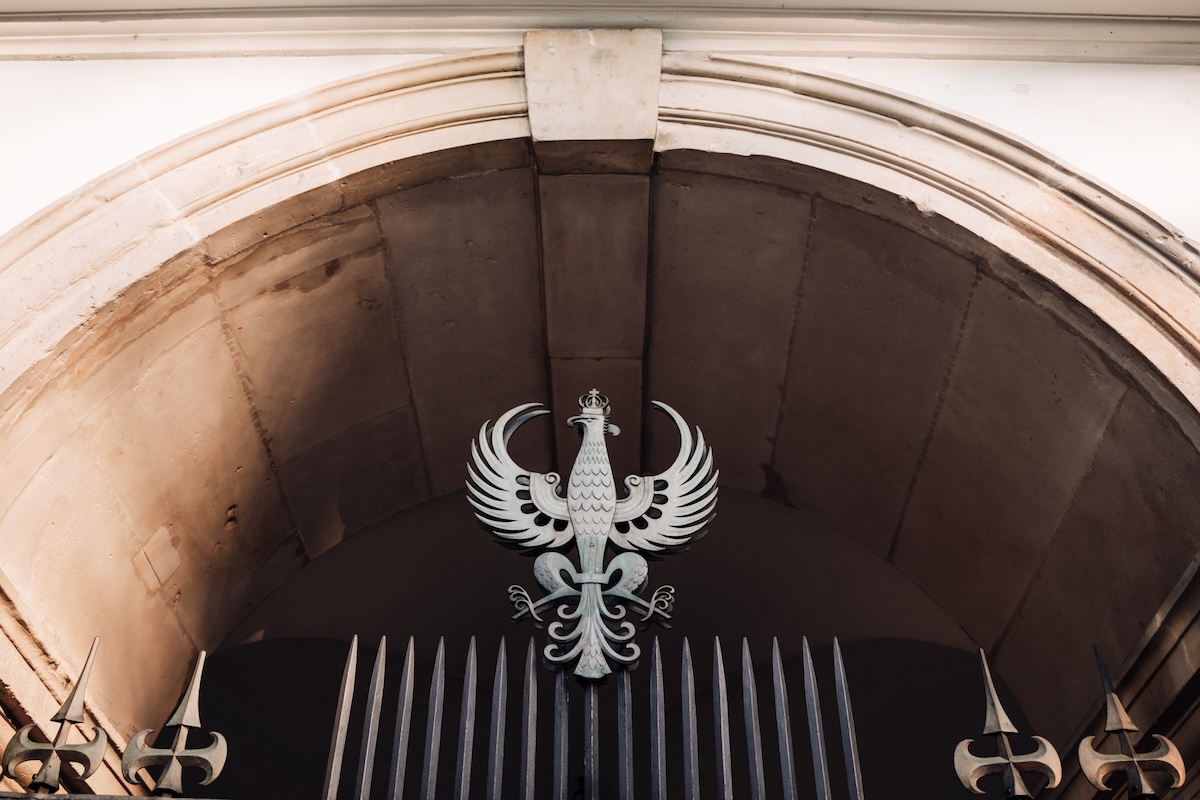
Zbliżenie na sklepienie jednej z arkad Grobu Nieznanego Żołnierza. Pod nią znajduje się góra zdobionej kraty chroniącej wnętrze. Na jej szczycie znajduje się metalowy Orzeł Biały w koronie.
Details of the Tomb of the Unknown Soldier. Photo by T. Tołłoczko

Historical cracks in the vault

Like almost every historical monument, the arcades of the Tomb of the Unknown Soldier also bear slight traces of the passing of time. Given the history of the building, the company is also monitoring pre-existing cracks in its vault. Their measurements were taken using the photogrammetric method, for which a camera with a full-frame sensor was used. In short, a series of photographs, known as photograms, were taken and used for spatial measurements. Photographs taken from different viewpoints and then collated together allow a faithful reproduction of the space under analysis. In this way, the data collected made it possible to confirm down to the millimetre that the width of the cracks is not increasing, which means that the works carried out by the company do not have an adverse effect on the Tomb of the Unknown Soldier.

Works at the Tomb of the Unknown Soldier

Geodetic monitoring of the Tomb of the Unknown Soldier is not the only example of works undertaken at this place. In September 2022, at the request of the Pałac Saski company, petrographic tests of the columns located above the monument were carried out. Samples from the bases of two of them were subjected to stone analysis to reflect as closely as possible the materials from which the palace colonnade was constructed.
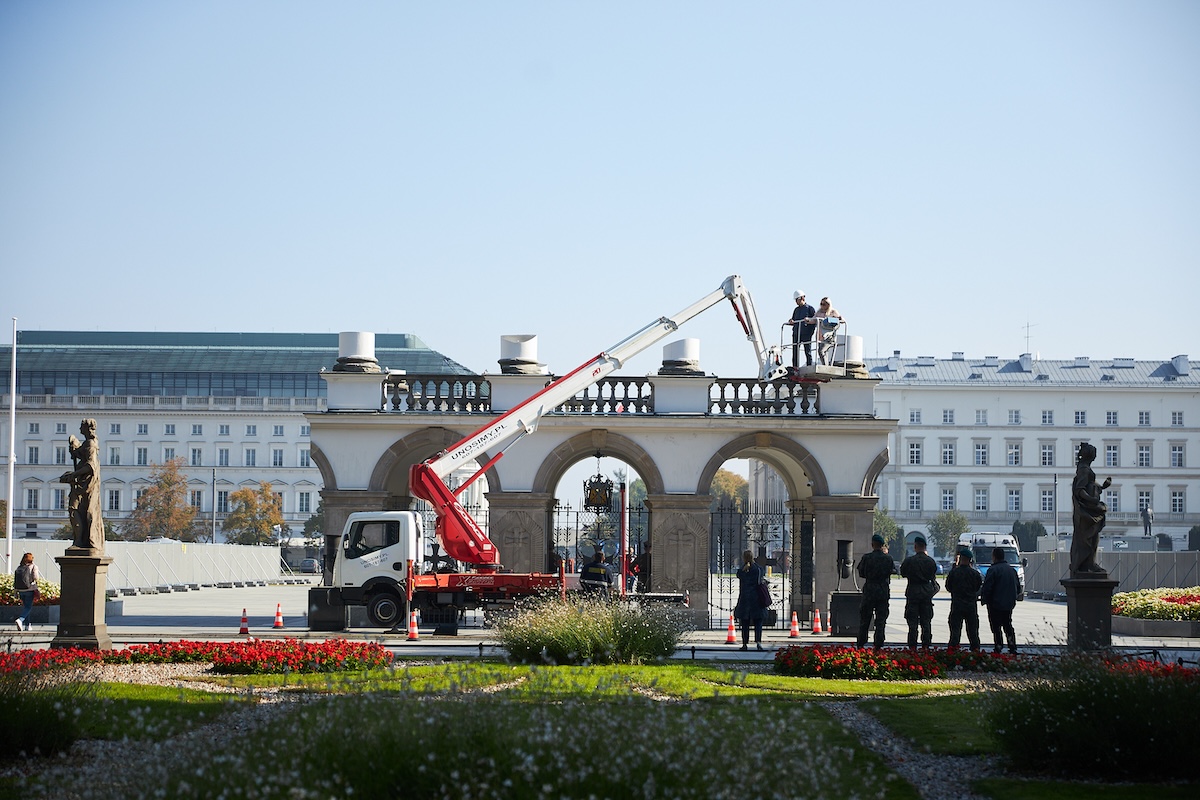
Grób Nieznanego Żołnierza od strony Ogrodu Saskiego. Przed Grobem stoi podnośnik koszowy. Jego kosz, w którym stoją dwie osoby, został podniesiony na wysokość sklepienia Grobu.
Petrographic tests 2022. Photo by M. Skwara

news

Growing public support for the reconstruction of the Saski Palace

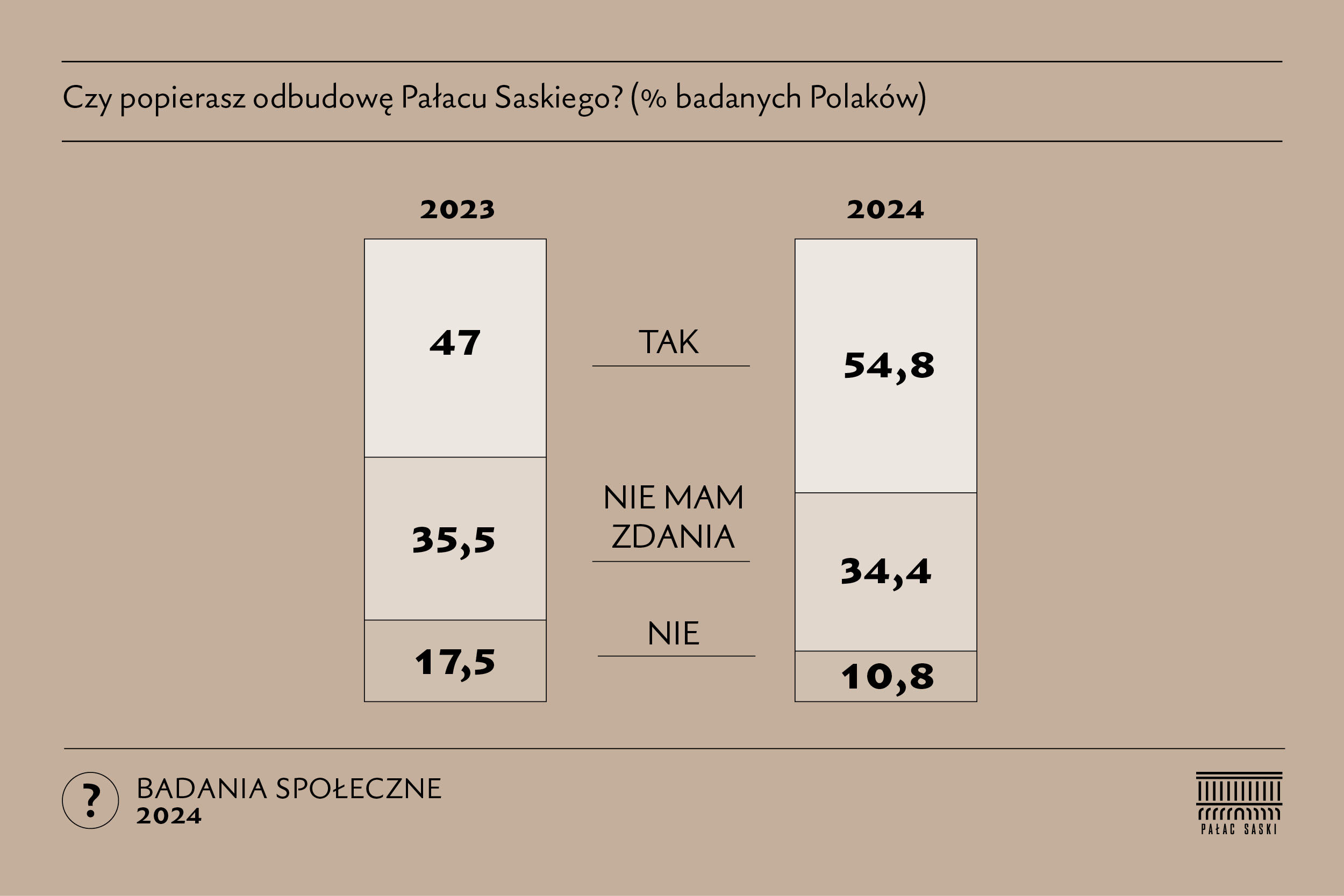
According to the latest opinion polling on the reconstruction of the Saski Palace (also Saxon Palace), the project enjoys steadily growing public support. By the end of 2024, the data showed supporters outnumbering opponents by roughly five to one. More than half of respondents (55%) expect the reconstruction to take place, reflecting a European trend […]

Sandstone samples at the Saski Palace reconstruction site

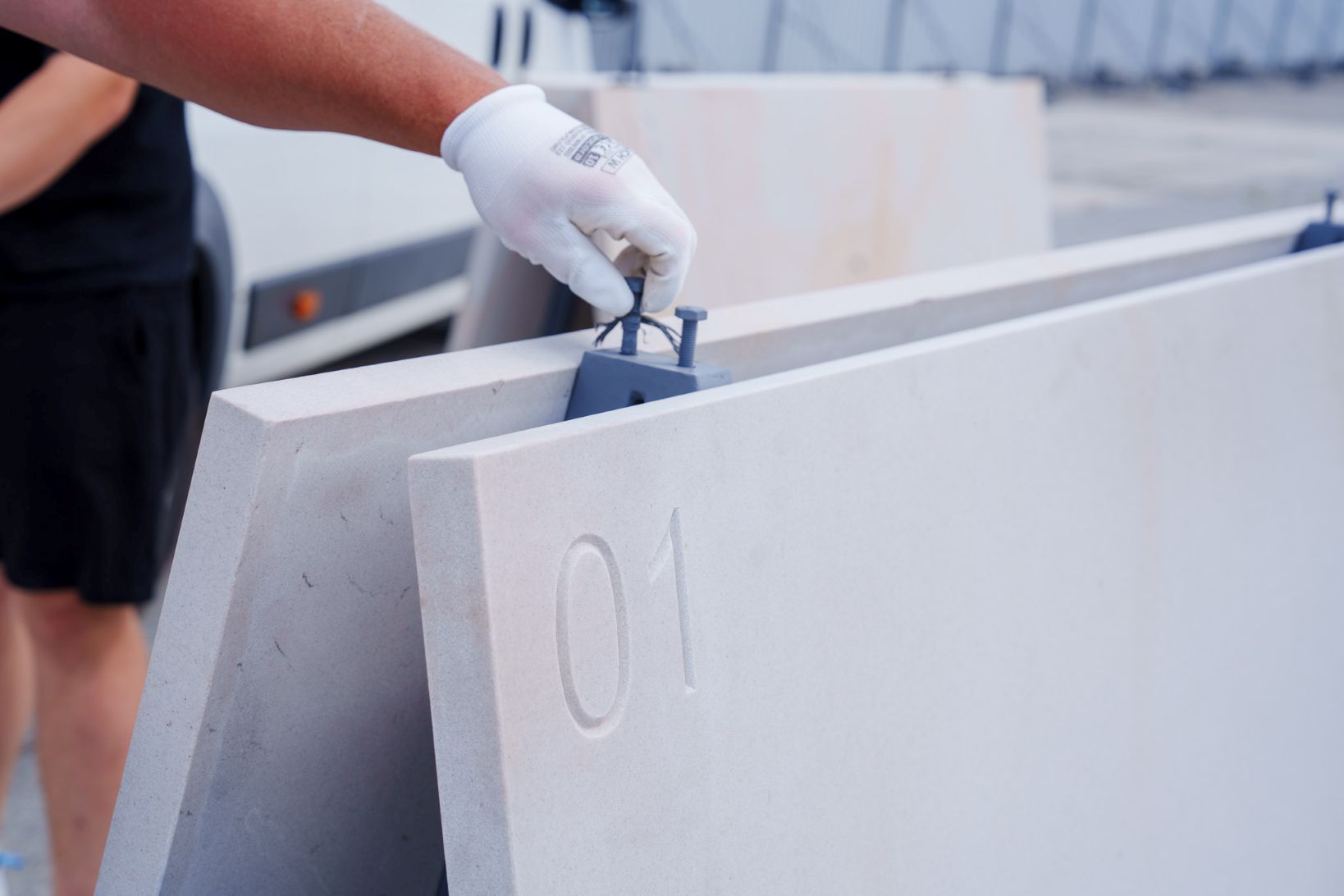
Monitoring of trial sandstone slabs is now under way as part of the reconstruction of the Saski (also Saxon) and Brühl Palaces and the tenement houses on Królewska Street. Twenty sandstone slabs, sourced from several Polish quarries, including near Szydłowiec and in Lower Silesia, have been delivered to Piłsudski Square. Regular on‑site monitoring will show […]

29th International Poster Biennale – Exhibition on Piłsudski Square

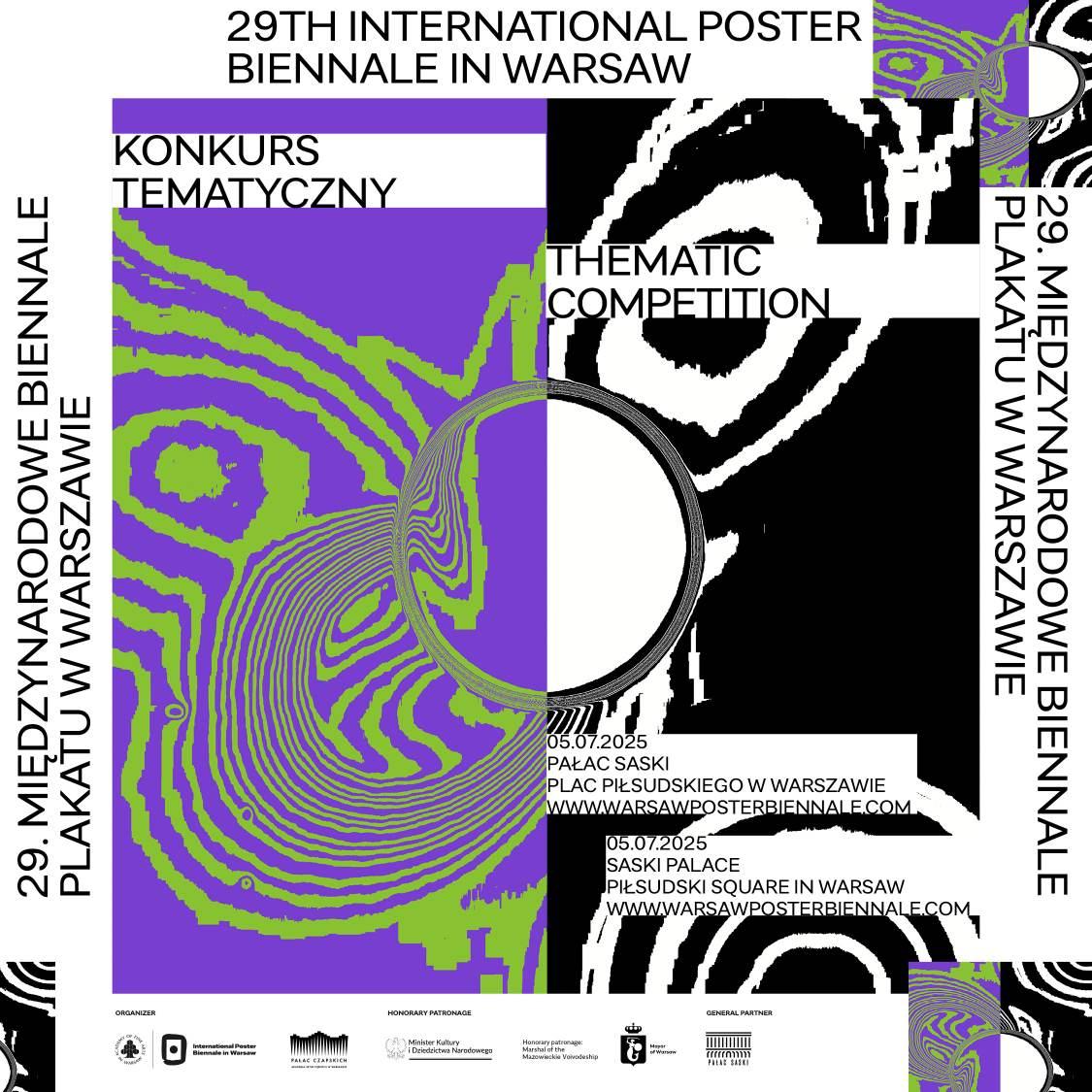
For the second time, the fencing around the reconstruction site for the Saxon and Brühl Palaces, as well as the tenement houses on Królewska Street, will serve as an outdoor poster gallery. The open‑air exhibition ‘Quo Vadis’, featuring selected works by artists taking part in the 29th International Poster Biennale in Warsaw, will be on […]

Nowy katalog dzieł z archiwów w Dreźnie: Pałac Saski na dawnych rysunkach

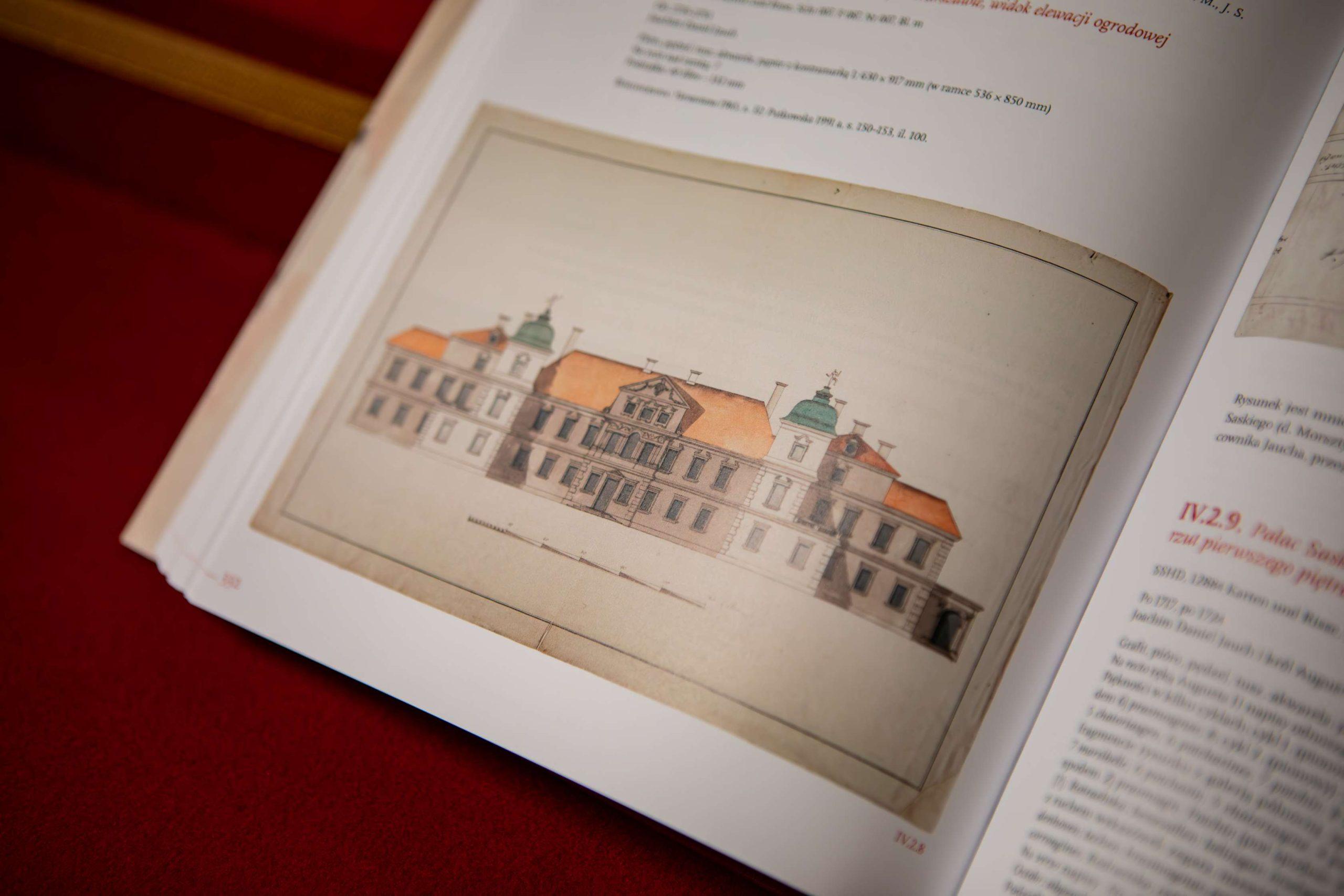
„Wspólne dziedzictwo polsko-saskie” to opracowany naukowo zbiór powstałych w okresie panowania dynastii saskiej ponad 1100 rysunków architektonicznych, które dziś znajdują się w drezdeńskich archiwach. Wzbogaconą o zbiór esejów publikację pod redakcją profesorów Jakuba Sity oraz Pawła Migasiewicza wydano m.in dzięki współpracy Instytutu Sztuki PAN, Zamku Królewskiego w Warszawie, Instytutu Polonika oraz spółki Pałac Saski. Premiera […]

298th anniversary of the Saxon Garden

The last day of May saw the largest Saxon Garden Festival to date. Nearly 80,000 Warsaw residents and visitors took part in the fourth edition of the all‑day retro event, whose 2025 programme was expanded with contributions from new partners. As a result, alongside musicians, interwar‑period re‑enactors, enthusiasts of penny‑farthings and automobiles, and virtual‑reality specialists, […]

Historic fragment of the Royal Castle discovered at the Brühl Palace site

On 31 March 2025, at the initiative of the Pałac Saski company, a fragment of a stone plaque that once adorned the Royal Castle’s eastern façade was formally presented to the Royal Castle at a ceremony in the Knights’ Hall. The inscribed sandstone slab, discovered during the first season of archaeological excavations conducted by the […]

Reconstruction of the Saski Palace: 2024 summary

The latest stages of preparatory works for the reconstruction of the Saski and Brühl Palace complex, as well as the three tenement houses on Królewska Street in Warsaw, are nearing completion. In 2024, works carried out on the site at Marshal J. Piłsudski Square focused primarily on safeguarding the historic fabric represented by the remains […]
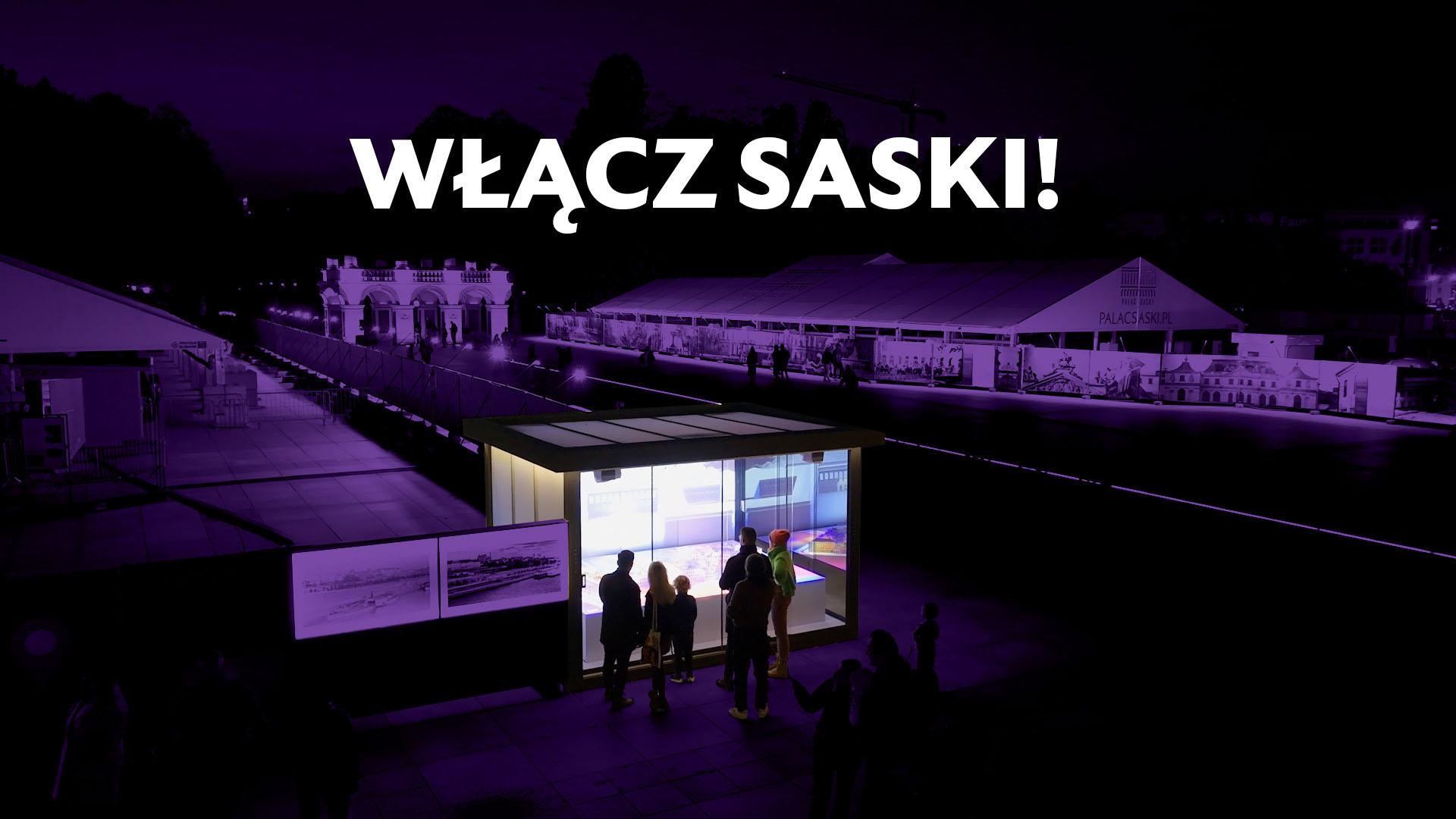
Na obrazku widoczny jest plac Piłsudskiego w kolorze fioletowym. Na środku obrazka widoczny jest przeszklony pawilon w kolorze. Wokół pawilonu, w którym widać multimedialną prezentację, stoi grupa widzów.

Switch on the Saski Palace! A multimedia show in Piłsudski Square

A 3D model of the reconstructed Saski (also Saxon) and Brühl Palaces, along with the townhouses on Królewska Street, which has been attracting the attention of passersby in Piłsudski Square, Warsaw, since May 2024, has been given a new splash of colour. Now, inside the glass pavilion, visitors to the city centre can watch a […]